
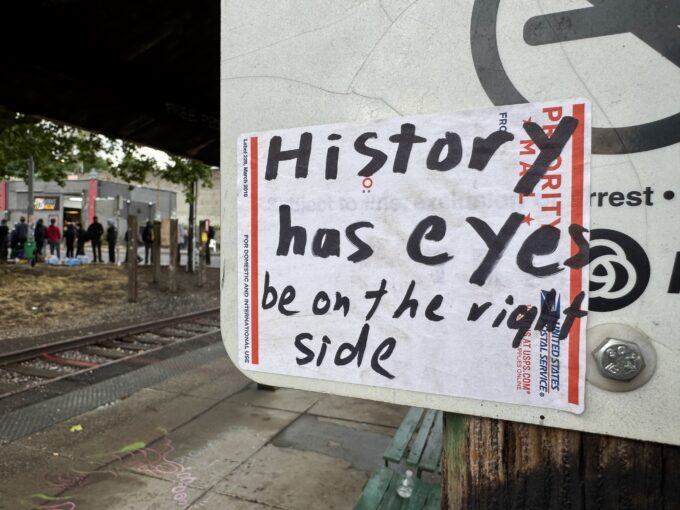
Photograph by Nathaniel St. Clair
Note: The authors and contributors to this statement had initially envisioned that it would be published as an official statement from the Society for the Study of Peace, Conflict, and Violence — Division 48 of the American Psychological Association (APA). However, APA’s policies and concerns over IRS regulations prohibited its publication in that form, and it does not represent the official positions or policies of Division 48 or the APA. We thank CounterPunch for providing us with the opportunity to share our analysis and call to action here.
Contributors to this statement include Rehman Adbulrehman, Elliot Benjamin, Alaina Brenick, Sara Buckingham, Sarah Constantine, Donna Demanarig, Judy Iwens Eidelson, Judith Gulko, Ian Hansen, Monica Indart, Emily Lutringer, Sodah Minty, Tiffany O’Shaughnessy, Michele Ribeiro, Stephen Soldz, Karen Suyemoto, and several others who prefer to remain anonymous.
+++
Psychology as a discipline, and the American Psychological Association as the world’s largest organization of psychologists, has a core commitment to advancing human welfare through scientific rigor and ethical practice. APA’s mission is to promote “psychological science and knowledge to benefit society and improve lives.”(1) Similarly, APA’s ethics code states:
Psychologists are committed to increasing scientific and professional knowledge of behavior and people’s understanding of themselves and others and to the use of such knowledge to improve the condition of individuals, organizations, and society. Psychologists respect and protect civil and human rights and the central importance of freedom of inquiry and expression in research, teaching, and publication. They strive to help the public in developing informed judgments and choices concerning human behavior.(2)
While acknowledging the profession’s past shortcomings in achieving these goals, today we bring this sense of responsibility and resolve to a moment of profound political and moral consequence here in the United States. We write to share our professional knowledge, so that our colleagues and the public gain a better understanding of the deeply disturbing psychological dimensions of authoritarianism. Its dangerous and destructive repercussions are now unfolding daily throughout this country, threatening the well-being — and the very survival — of individuals, communities, and the foundations of our democratic form of governance.
We are not writing in support of any political party or candidate. Indeed, we recognize that both major political parties have fallen woefully short in establishing and nurturing a society where prosperity, justice, and equal opportunity prevail for all. At the same time, it is clear to us that anti-democratic pressures have now escalated significantly under the Trump administration, and we worry that the gravity of the current situation is not receiving the attention it deserves — from the public or from our profession.
Guided by our ethical and scientific commitments and by our duty to oppose forces that dehumanize, divide, and destroy, we believe that we must not be silent at this time. Authoritarianism thrives on fear, disinformation, and the suppression of truth. Peace psychology compels us to name these threats and to work toward systems grounded in justice, empathy, and democratic participation.
What follows is an overview of what we know about authoritarianism, its psychological underpinnings, its current manifestations, and the urgent need to confront the harm that has already been done and to curtail the suffering that still lies ahead.(3) We are not claiming that the psychological phenomena we describe are unique to authoritarianism, nor are we suggesting that authoritarianism is distinguished only by its psychology. We are well aware that a full understanding of authoritarianism requires contributions from many disciplines, including political science, sociology, economics, and history, among others.
What Is Authoritarianism?
Authoritarianism describes a form of government where executive power is supreme; where independent civil society organizations are constrained and surveilled so as to reduce their willingness to challenge the state; where dissent is suppressed; where vulnerable communities are scapegoated; where elections, if held, are corrupted; where misinformation and disinformation are promoted; and where violence is often incited against opponents and “undesirable” communities.(4)
Beginning with the rise of fascism in Nazi Germany almost a century ago, psychologists have made crucial contributions to the study of authoritarianism.(5) They have found that authoritarian leaders often gain their power and influence by stoking and preying upon the public’s fears and insecurities, even devising newly-imagined threats and then confidently offering “solutions” that are promised to restore safety and order. Research by psychologists has also increased our understanding of authoritarian followers. They tend to see the world as a dangerous place and, as a result, they are strongly inclined to support and obey authority figures, to act aggressively against anyone who violates their group’s norms, and to deeply value what they see as tradition and convention. These dynamics stifle openness to difference and discourage the freedom of thought and expression that allow people and communities to thrive. Of greatest concern, psychologists have found that authoritarian leaders and followers tend to endorse anti-democratic policies; to support violence for achieving political aims; to hold prejudiced views toward minority groups and immigrants; and to support violations of human rights.(6)
We believe there is a range of psychological phenomena that become a source of significantly greater concern when authoritarian conditions prevail — as they increasingly do today.(7) Here, we briefly describe six of them, along with a partial list of current distressing examples. It is our hope that readers will appreciate the insights gained from psychological research and will take meaningful action to prevent and mitigate the risks that authoritarianism poses to us all.
Propaganda
Through decades of research, psychologists have learned that persuasion efforts often follow either of two paths.(8)One route encourages us to carefully look at the facts and think through the arguments presented before deciding what makes sense. But it is the other route that is most frequently used by authoritarian leaders. They intentionally tap into our strong emotions, aiming to make us fearful, angry, or optimistic. By arousing our emotions, they lead us to ignore the actual quality of the arguments or “evidence” they are presenting. Under these circumstances, we become more susceptible to believing false or inaccurate information, which may be designed to mislead us.(9) This is especially so when we are repeatedly exposed to that “information.” The use of propaganda has long been widespread, and it is certainly not new. However, it becomes potentially more dangerous when authoritarian leaders simultaneously suppress alternative sources of information.
In the current context, President Trump and members of his administration have routinely spread misinformation — on issues ranging from immigration to vaccines to climate change to election fraud and far beyond — triggering fear and outrage among ardent supporters and other members of the public.(10) Often, these statements have vilified political adversaries. For example, Trump himself has described opposition leaders as “crazed,” “cheatin’ dogs,” “the enemy from within,” and “kamikaze pilots,” and he has claimed “they hate our country.”(11) His press secretary has said that the Democratic Party is made up of “Hamas terrorists, illegal aliens, and violent criminals.”(12) And a deputy chief of staff has described the opposition party as a “domestic extremist organization” that is “devoted exclusively to the defense of hardened criminals, gangbangers, and illegal alien killers and terrorists.”(13) These instances illustrate the purpose that often lies behind the use of propaganda by authoritarian leaders: to inflame emotion, distort reality, and erode the shared trust on which democracy depends. In short, they are not the type of pronouncements one sees from political leaders who are committed to principles of democratic governance.
Conformity and Obedience
Psychologists have intensively studied conformity and obedience since shortly after World War II and the horrors committed by Nazi Germany.(14) Their research findings have shown that we are often motivated to conform so as not to lose a sense of belonging to a group, and to avoid the insecurity that might follow. At the same time, we often choose to obey so as not to be disrespectful to those in positions of power and due to concerns about possible retribution. These everyday inclinations, driven in part by fear or the need for security, transcend specific political environments. But they are likely to carry heightened influence and consequence when the stakes of non-compliance and disobedience intensify and widen, as is the case under authoritarian regimes.
Consider several contemporary examples. With support from adherents to his “Make America Great Again” agenda, President Trump has regularly taken steps to instill fear in both his allies and his adversaries, warning followers not to step out of line and demonstrating to rivals that there is a heavy price to pay for defying him. For example, politicians in his party who fail to conform face the prospect of primary challengers more aligned with the president and the heightened risk of losing their seats in the next election cycle.(15) Far more extreme, during the January 6, 2021, assault on the U.S. Capitol, Trump supporters called for then Vice President Mike Pence to be hanged for failing to obey and subvert the election results — with multiple insiders later reporting that the president seemingly approved.(16) Meanwhile, individuals with contrary views who have resisted the White House’s crackdown on free speech on college campuses have faced severe repercussions, particularly students who have been arrested and threatened with deportation for protesting against Israel’s assault on Gaza and in support of Palestinian rights.(17) At the same time, many major corporations made large financial contributions to Trump’s inauguration events and have now rolled back their Diversity, Equity, and Inclusion (DEI) initiatives to avoid running afoul of Trump’s good graces.(18) All of these actions illustrate how conformity and obedience can be used to instill fear, enforce loyalty, and weaken dissent. Expectations for unquestioning conformity and obedience are more characteristic of a dictatorship than a democracy.
Moral Disengagement
Psychologists have documented that people use a wide range of rationalizations, various forms of moral disengagement, to justify their own wrongful behavior and to escape feelings of remorse for the harm they have done.(19) Among the most common of these psychological mechanisms are moral justification, in which we claim that our actions serve a greater good; euphemistic labeling, in which we sanitize our language to disguise and minimize our wrongdoing; dehumanization, in which we portray those we treat cruelly as less than human and thereby distance ourselves from their hurt; misattribution of blame, in which we hold the victims of our actions responsible for their own suffering; advantageous comparison, in which we claim that the wrongful things we do are not as bad as what others do or have done; displacement of responsibility, in which we claim that we are only following orders or that it is someone else’s responsibility; and minimization of consequences, in which we downplay or even deny the adverse effects experienced by those we harm. These moral disengagement rationalizations are routinely used by authoritarian leaders to reduce resistance to their harmful agenda.
The Trump administration has adopted these tactics on multiple fronts and in doing so has heightened pre-existing injustices.(20) For instance, they have used moral justification to terminate DEI programs, claiming that their actions are “making America great” by correcting both “shameful discrimination” against White Americans and the waste of precious financial resources.(21) They have relied on euphemistic labeling, advancing “patriotic education” and ending “radical indoctrination” as the rationale for requiring that school curricula no longer include material related to the country’s fraught history of slavery and racial injustice, as well as banning contemporary positive representations of different minority groups, such as trans people.(22) In unleashing the U.S. military on American soil, they have turned to misattribution of blame, falsely insisting that these steps are necessary because the targeted cities have become overrun by crime, anarchy, and “insurrection.”(23) And through minimization of consequences, they have downplayed or denied the dangers associated with curtailing workplace health and safety standards, reducing environmental protections, and gutting scientific and regulatory enforcement agencies and staff.(24) These examples illustrate how moral disengagement can be used to excuse harm, to disguise injustice, and to make cruelty seem acceptable. Psychological rationalizations like these all serve to make an authoritarian agenda appear more morally palatable, despite the drastic and many times irrevocable harm that it causes.
Dehumanization
Psychologists have extensively studied the disturbing phenomenon of dehumanization, the process by which some people and groups are viewed and treated as less than fully human.(25) Prejudice and discrimination — based on race, ethnicity, religion, gender, sexual orientation, and disability or other characteristics — often lie behind the dehumanization of others. Those perceived as less than human are considered less deserving of dignity, care, and respect and more deserving of exclusion, exploitation, and abuse.(26) Psychologically, it becomes easier to mistreat people — including portraying them through demeaning language and imagery — when they are viewed as inferior, subhuman and, in its most extreme form, nonhuman. In this way, dehumanization can remove moral taboos and thereby encourage horrific acts of humiliation, cruelty, brutality, and even genocide.(27) Among their followers, authoritarian leaders often successfully promote this degrading perception of those they consider adversaries, heightening the likelihood of violence.(28)
The Trump administration’s dehumanization of people of color and other communities it views as inferior and “other” is widespread.(29) Still, it is perhaps most consistently apparent in the harsh and often brutal treatment of immigrants. During last year’s presidential debate, Trump memorably and baselessly warned that Haitian immigrants were eating the pets of their neighbors.(30) At other times, he has described unauthorized immigrants with words and phrases such as “criminals,” “rapists,” “poisoning the blood of our country,” “from insane asylums,” “animals,” and “not human.”(31) Since returning to the White House, Trump has used this dehumanizing rhetoric to facilitate a violent crackdown on immigrant and racialized communities.(32) Masked Immigration and Customs Enforcement (ICE) agents have terrorized neighborhoods with large-scale immigration sweeps, engaging in racial profiling, grabbing and incarcerating people without due process, and assaulting onlookers who get in the way.(33) Trump has gone so far as to call in National Guard troops to California, Illinois, and Oregon — against the wishes of the governors of those states — falsely claiming they are necessary to quell “out-of-control protests” and to protect ICE agents and facilities.(34) At the same time, the treatment of detained immigrants further dehumanizes them and is sometimes deadly.(35) Inhumane conditions are commonplace at detention centers: overcrowding, extreme temperatures, neglect and abuse, indifference to medical needs, and disregard for distraught family members.(36) And many of these immigrants have been deported to countries known for heightened levels of poverty, violence, and instability, where previously they have been persecuted and continue to be at risk.(37) Such examples demonstrate how dehumanization strips people of dignity, normalizes cruelty, and erases the empathy on which our shared humanity and democracy depend. Dehumanization of this magnitude is not seen in stable democracies.
Systemic Racism
Psychologists have played an important role in illuminating the prevalence and dynamics of systemic racism.(38) These entrenched and often under-recognized policies and practices — in contexts ranging from criminal justice to education to housing and well beyond — bestow significant advantages on white people over people of color. They have been a disturbing reality in the United States ever since the country’s founding. Psychological research has shown that people tend to believe that significant differences in power between racial groups are the way things are supposed to be even when they themselves are the ones disadvantaged by these unjust disparities.(39) Similarly, mistakenly believing that longstanding inequalities are justified because otherwise they would not exist can lead us to think that unearned privileges are based on merit when in fact they are not.(40) Authoritarian leaders take advantage of these biases when they argue for a return to the “natural order” of things.(41)
Actions of the Trump administration deny and exacerbate the reality of systemic racism in the United States.(42) DEI initiatives have been shut down under the guise of promoting a “colorblind and merit-based” society — despite decades of psychological research demonstrating that colorblind racial ideology exacerbates inequality and meritocracy is a myth used to justify the status quo.(43) The work of the Department of Justice’s Civil Rights Division has been sharply curtailed, hampering voting rights protections for historically marginalized groups.(44) An executive order has undercut decades-old legislation aimed at preventing discrimination, including the Civil Rights Act of 1964, the Fair Housing Act, and the Equal Credit Opportunity Act.(45) Content highlighting the struggles and achievements of Black and Native Americans has been scrubbed from federal museums, landmarks, and websites.(46) The administration has abandoned civil rights investigations that had been established in order to hold law enforcement departments accountable for police violence against Black people.(47) And while on the campaign trail last year, Trump pledged to fight what he described as “a definite anti-white feeling in this country.”(48) Each example illustrates how systemic racism sustains inequality, distorts justice, and corrodes the very ideals of fairness and equity that democracy demands. These are simply not the actions of a government committed to ensuring equal opportunity for all.
Perceived Helplessness
Research by psychologists has found that feelings of helplessness — whether held by an individual or by a group — pose a significant obstacle to success in any undertaking.(49) Those who lack confidence in their capabilities are more likely to give up and abandon their goals, and they do not bounce back as resiliently when their efforts prove unproductive. In this way, believing that we cannot control important outcomes in our lives can lead to resignation, which can destroy our motivation to work toward crucial personal and collective objectives.(50) This belief that our actions are futile and that adversity cannot be overcome is something we fight hard to resist. But if we reach that demoralizing conclusion, the effects can be paralyzing and difficult to reverse. Knowing that feelings of helplessness have a major impact on the choices we make and the effort we are willing to expend, authoritarian leaders often manipulate our perceptions of what might be possible through collective action.(51) This is why perceived helplessness and lack of control — especially when widely shared — make it easier for a small minority to control a much larger group, readily maintaining an oppressive and unjust status quo because active resistance is absent and voices of opposition are silent.
Today, we see the Trump administration repeatedly taking steps to simultaneously demonstrate its own power and instill a sense of helplessness in those who oppose its agenda.(52) These actions have included disregard for legal orders blocking its unlawful initiatives; crackdowns on universities and non-profits that fail to abide by its demands, thus limiting free speech; retaliatory criminal complaints filed against political adversaries; threats to use U.S. cities as “training grounds for our military;” efforts to quell criticism from journalists and talk show hosts; and frequent social media posts that ridicule those who question or protest its authority.(53) In these ways and more, authoritarianism breeds helplessness and weakens resistance, saps hope, and erodes the collective power on which a free society depends. None of these tactics is characteristic of political leadership that has an abiding respect for the public’s legal and civil rights.
Meeting the Current Moment: Our Call to Action
In this statement, we have drawn upon decades of research by psychologists to demonstrate the role that psychological phenomena are playing in the distressing shift toward authoritarianism in the United States today.(54) We not only consider it our responsibility to illuminate these patterns of thought and behavior — and their dire consequences — for our colleagues and the general public. We are also convinced that our professional knowledge and moral outrage must be directed into concrete efforts aimed at preventing and resisting authoritarianism’s destructive repercussions.(55)Toward this end, below we describe a range of strategies and actions that we believe can generate and sustain positive social change.
Most directly relevant to our own professional communities, psychologists must collectively support and advocate for institutional courage.(56) This means demanding that leaders of our organizations uphold and defend — both publicly and internally — academic freedom, civil rights, and democratic values through public statements and through the development of binding resolutions that prevent and curtail the current administration’s attacks on the independence of our institutions.(57) Leadership accountability must also be guaranteed through mechanisms such as internal reviews and audits, and the implementation of task forces or working groups that can monitor and report potential failures to defend our communities.(58)
We encourage academic institutions to follow current legal recommendations and to develop and implement specifically tailored policies and programs aimed at protecting and supporting their own members.(59) They should pursue these same commitments in relation to the communities and individuals they serve, particularly the ones who are currently being targeted by the Trump administration.(60) We especially note the responsibility of institutional authorities and those who have more relative privilege and power to advocate, speak up, and support those currently at greatest risk of persecution.
More broadly, psychologists must also organize as a community to facilitate effective collective action that challenges social injustice and safeguards human rights.(61) Through a wide range of strategies and tactics, we must confront authoritarianism and prevent its damaging consequences.(62) For instance, through public and civic education psychologists can promote reflexive thought and critical consciousness, paving the path to diverse ways of countering authoritarian repression.(63)
We further believe that this shared effort must actively involve and engage the communities with whom we work and to which we belong. Mutual support and reciprocity can be strengthened through relational and network organizing and horizontal solidarity, thereby enabling

